Verbal Messages in Japanese Culture
The official language that is spoken in Japan is Japanese. Standard Japanese or Nihongo is the dominant language that is spoken in Japan, but there are over 80 regional dialects in Japan with their own grammatical features and pronunciation. Some regional dialects include Kyoto Ben which is spoken in Kyoto and Osaka Ben which is spoken in the Kansai region of Japan.
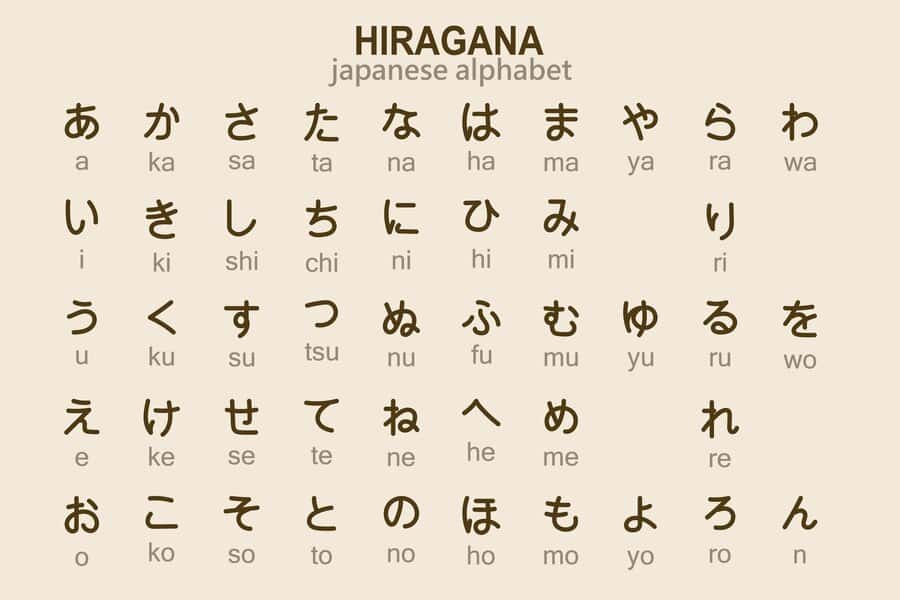 |
| Japanese Alphabet |
A lingua Franca is a common language used for communication between people that do not share the same native language. A lingua franca is a language that serves as a sort of “bridge” that allows groups to understand each other. The English language is a lingua franca that is used in many countries across the globe. The advantage of using English as a Lingua Franca is that it can provide a common language for communication if I was trying to communicate with someone in Japan. I would not necessarily have the expectation that the person I am trying to speak with in Japan speaks English, but if they did understand some English then it would very effectively improve our communication. Cultural differences and language proficiency could lead to misunderstandings, but a common language at least allows for basic communication to be exchanged.
Now I am going to go over some common phrases and words in Japanese.
“Hello” = こんにちは / Konnichiwa
“Yes” = はい / Hai (pronounced like “high”)
“no”= いいえ / Iie (pronounced like “ee-eh”)
“Please” = おねがいします / Onegaishimasu
“Thank you” = ありがとう / Arigato
“Can you help me?” = てつだってくれますか?/ Tetsudatte kuremasu ka?
“ I don't understand” = わかりません / Wakarimasen
“ I don't speak Japanese” = 日本語を話せません / Nihongo wo hanasemasen
“ my name is Allison” = 私の名前はアリソンです / Watashinonamaeha arisondesu
Learning a new language in any capacity can be difficult. I definitely struggled to pronounce many of the words on this list, especially the longer phrases such as “I don't speak Japanese” and “my name is Allison”. If I was traveling to Japan it would be very important for me to learn how to say some of these basic words and phrases so that I am at least able to communicate a little bit without relying on English. Even though the English language is a Lingua Franca, it is still unfair to expect that the people of a different country are going to speak English. It's always important to learn some words of the native language of the country you are visiting!
I found a Japanese article that I believed was discussing a festival in Japan. I picked a sentence from the article and plugged it into Google translate (Matcha).
This is what I put into google translate, “はると 夏なつと 秋あきに、日本にほんで いろいろな お祭まつりが あります。東京とうきょうでも、たくさんの お祭まつりを やっています。”
And this is that sentence in English, “There are many festivals held in Japan in spring, summer, and autumn. There are also many festivals held in Tokyo.”
I know that direct translations are not always 100% accurate due to cultural differences and differences in the meaning of words. I don't notice too much in the translation that I did as it seems to be a very straight forward and simple sentence that I translated.
The phrase “ language influences our view of reality” means that the languages we speak shape the way we think, feel and understand the world around us. All languages have their own expressions and grammatical elements that shape that culture and make it unique. Language is a very important aspect of a culture that shapes much of how people view the world around them!


Comments
Post a Comment